The Ugly Betty franchise, which originated as a Colombian telenovela called Yo soy Betty, la fea, has achieved extraordinary global appeal through the decades, inspiring remakes in Russia, Germany, India, the U.S., and China. The Guinness Book of World Records lists it as the most successful telenovela in history, with the most global adaptations.
Growing up in the U.S. in a Hispanic household, I was fond of the American version of the show, which follows a smart and kind young woman who struggles to navigate an appearance-obsessed society. I was intrigued to find out: what gives the show its international appeal? To answer the question, I compared America’s Ugly Betty with the Chinese adaptation, Ugly Wudi (丑女无敌).
First, I considered whether the telenovela format, in general, is popular in China. I gathered input from Chinese students and posed the question to Chinese “netizens” on an online forum. Everyone said the same thing: Telenovelas are not especially popular in China.
I realized: it isn’t the genre’s mass appeal that’s key to the show’s crossover charm. I spoke with Michael Fisk, a producer and senior executive with experience leading diverse teams. “At the base core of how we are as humans, we laugh together, we cry together, we get scared together,” he said. “There are those emotions and feelings that are universal truths.”
While watching the American and Chinese versions of the show, I realized that the two evoke similar emotions. Both Ugly Betty and Ugly Wudi explore feelings like insecurity, self-doubt, loneliness, and resilience. Both tackle similar themes too, such as proving your self-worth and challenging popular notions of beauty.
There are, of course, differences in the U.S. and Chinese versions, tailored to each country’s distinct cultural context. The U.S. adaptation of Ugly Betty stars the Latina actress, America Ferrera, whose nationality is central to the show. Not only is Betty deemed “ugly,” but she also stands for embracing her culture despite being a minority in her company. Her character’s appeal is her individualism and her determination to maintain her authenticity, even in an environment where she stands apart. Reflecting on the cultural impact of Ugly Betty and the broader representation it championed, Ferrera remarked during a 2019 TED Talk, “I have witnessed the power our voices have when they can access presence in the culture.”
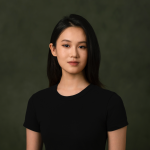
On the other hand, Ugly Wudi focuses less on Betty and her cultural identity than on the power dynamics within her Chinese company and overall societal pressures. The show also generated controversy, as many viewers and critics argued that lead actress Shera Li was too beautiful for the title role. Some felt the show should be renamed “Pretty Wudi,” according to The Taipei Times, but one viewer conceded that an attractive leading lady was necessary to draw a Chinese audience, stating: “If they really use an ugly girl to play her, who will give her a chance?”
According to Fisk, foreign adaptations must delicately balance the cultural nuances of their target market. “If we make this story too American, it won’t appeal to China,” he said. “If we make it too Chinese, it won’t appeal to the US.”
Ugly Betty and Ugly Wudi both managed to strike a chord in their respective audiences. Ugly Betty ran for four seasons, drew millions of viewers, and earned Ferrera an estimated $250,000 per episode. Ugly Wudi achieved similar success in China, earning a record 73 million viewers on its opening night and achieving widespread popularity.
Nailing the cultural nuances are important, but the “universal truths” are what really matter. It’s why American shows like Friends, Game of Thrones, and Modern Family garner mass appeal in China, and why Asian dramas such as Squid Game, Meteor Garden, and A Love so Beautiful resonate in the U.S. Storytelling serves as a reminder that we are not as different as we think we are, and that the emotions we all feel remain the same.
(Photo: America Ferrera at the 2010 Voice Awards)