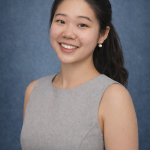
Katie Gee Salisbury is a writer, editor, and photographer whose work focuses on race, identity, and representation. Her new book, Not Your China Doll: The Wild and Shimmering Life of Anna May Wong, tells the story of Hollywood’s first Chinese American movie star, who gained “international fame” while navigating the deep racial and gender barriers of early 20th-century entertainment. By reclaiming Wong’s legacy from stereotypes that long defined and constrained her, Salisbury offers a fresh, nuanced portrait of a trailblazer who challenged the limits imposed on her.
What inspired you to look into the topic of mixed-race representation and select Anna May Wong as the subject of analysis?
Twenty years ago, when I was a college student at Stanford, my first internship after freshman year was at the Chinese American Museum in downtown Los Angeles. One of the photographs really caught my attention, and it was a photo of Anna May Wong in a convertible during a parade with some other dignitaries in Chinatown. I didn’t know at the time, but I think it was The Moon Festival in 1941. I didn’t know who Anna May Wong was, but I was immediately curious, like “Who was that woman?” So, I asked and was told: her name is Anna May Wong. She is this internationally famous Chinese American movie star from the 1920s and 30s. It just really blew my mind, because I had never heard of her, despite growing up with limited Asian American role models in the media. This sense of curiosity turned into a fascination with Anna May Wong’s life and her forgotten legacy in Hollywood.
When I started asking people, “Do you know who Anna May Wong is?” nobody seemed to know who she was anymore. I felt a sense of injustice on her behalf. How could this important figure in early Hollywood be completely forgotten? That was the beginning of a long-term obsession, both with learning more about her and sharing her story with others. At the same time, as a fifth generation Asian American, I felt a deep personal connection to Wong. This connection and the broader implications of her story in the context of Asian American representation in the media fueled my desire to write this book and share her story to the public.
Wong’s career took her beyond Hollywood to Europe and China. How did these different cultural contexts impact the way she was perceived—and how she saw herself?
She was famous in a period of time when people weren’t yet familiar with the idea of being a hyphenated American, that you could be Chinese and American. That created a lot of confusion and expectations for her. Everyone saw her as Chinese first because, because that’s what she looked like. She was also made to play these so-called “oriental roles” and Hollywood’s idea of what Asia was like. So, she goes to Europe because she has started a career in Hollywood, and they want to bring over some Hollywood stars to make their films more popular, so they can distribute them around the world, similar to what Hollywood did and does. But when she arrived in Germany, people were just so intrigued by her being Chinese, they often forgot to mention the fact that she was also American. Also, the expectations are really high that she is Chinese and Hollywood. She was never too much and never enough.
Your newsletter, “Half-Caste Woman,” explores mixed-race identity and cultural representation. Did Wong’s experiences as a Chinese American woman inform your broader understanding of intersectionality?
I definitely relate to her experience in the fact that she was not Chinese enough for Chinese, and not American enough for Americans. She felt like she was caught between two worlds. Sometimes it feels that way, because you understand things about both sides of your heritage, but they don’t understand each other, so that you can see everyone’s flaws. I certainly relate to her in that sense. She’s a really inspiring figure to me because she had to deal with so many challenges. The treatment that she got was really terrible, in Hollywood and in other places. Yet she was very determined and stubborn. So, sometimes when I’m frustrated or I’m having a hard time with something, I do think about all the stuff that she went through, and she didn’t stop.
What do you hope readers take away from Not Your China Doll, particularly in terms of understanding the intersections of race, gender, and media representation?
I hope that by reading it, they may walk in somebody else’s shoes for a few miles and understand what it’s like to be Asian American and to be an Asian American woman working in Hollywood. There are the American expectations, the Chinese expectations, and the Hollywood expectations. It’s a lot. I think one of the things that has been validating is that I have heard from a lot of Asian American women readers who really relate to Anna May Wong’s experiences. That is also why the book is called “Not Your China Doll.” Because, to some people, calling someone a china doll is a compliment. So what’s wrong with that? That’s what they think. I’m trying to show that actually no woman wants to be a doll. We have our own ideas about our lives, and we have agency and power, and that was definitely true of Anna May Wong. Anna May Wong’s life was a testament to defying these stereotypes, and through her story, I seek to inspire a recognition of and respect for the nuanced identities of Asian American women.
In recent years, attitudes toward China have been largely negative across many high-income countries such as the U.S., Canada, the UK, and other European nations. What keeps your interest in researching topics about China, and what is your impression of China as a fifth-generation Chinese American?
I think there are a lot of great things about China if you like its culture. My family is from China, four or five generations ago. I’ve gone to visit my grandmother’s ancestral village in southern China. Some things are meaningful to me there. I do wish I could spend more time there. But I think a lot of political things are what concern me, like the lack of freedom of speech and rights, and the government’s ability to control a lot of things.