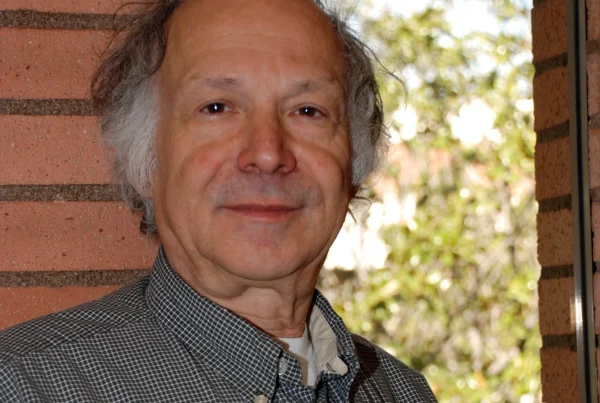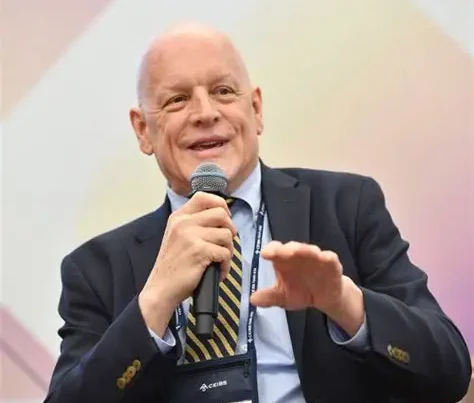
Jesse Appell is an American comedian and Xiang Sheng (Chinese cross-talk) performer who apprenticed under Master Ding Guangquan in Beijing. He is also the founder of Jesse’s Tea House and performs in both Chinese and American comedy circuits.
Opening
Comedian and cross-cultural performer Jesse Appell recently published his new book This Was Funnier in China on Feb. 2, 2026, recounting his journey in Chinese comedy. During his recent visit to USC to promote the book, he discussed the cultural nuances of humor, the challenges of working across cultures, and the lessons he’s learned from building a non-traditional career. US–China Today had the opportunity to interview him during his visit.
We know that you do stand up comedy and Chinese Xiang Sheng too. What’s the core difference between the U.S. and China’s audience in their laughing point?
I think one of the core differences between American and Chinese comedy is just wherever life is different, the comedy will also be different. Because comedy comes from life. One example I can say is a lot of Chinese comedians complain about their boss or their job. But what makes the job bad? That’s different in different cultures. Some people in China might just accept that their boss forces them to work overtime, like eight days in a row. That is horrible. But for Americans, they might have a completely different thing because eight days in a row working overtime is a legal problem, somebody should go to jail. Whereas in China, it’s still kind of funny, because it sucks, but everybody has that experience with it. So I think that the way the cultures look at these problems are different.
I also found that a lot of Chinese jokes have to do with kind of interpersonal status, like the basic joke in Chinese, you say, 我是你大爷! It means I am your great uncle. It doesn’t mean anything in English, but in Chinese, it means you’re below me, man get down there. It is somewhat equivalent to when an NBA player dunks on someone and says “too small,” it serves as a similar kind of cultural expression.
So I think that those status things are kind of more up front in China. Even when I did a Xiang Sheng with 大山 (Da Shan), we had a whole bunch of jokes about status. Because Da Shan formally apprenticed to 姜昆(Jiang Kun) and I apprenticed to 丁广泉(Master Ding). Jiang Kun is actually one generation below my master. So technically, Da Shan is my 师侄, like my cousin. This guy is 30 years older than me and a big star. So we will make jokes like hey, I want to introduce you all to my cousin. He’s like, “what am I?” Technically, that’s true.
So these jokes work better in Chinese, whereas in English, it just doesn’t have the same pop to it. So different cultures show up in different ways, but it’s lot of fun for me as a comedian figuring this out and playing within it. And there’s no direct answer to say “okay, I figured it out.
You have been doing comedy for a long time, can you tell me the best part of being a comedian?
One of the best parts of being a comedian is that it feels like part of my job and my reason for being here is to look at the world and try to understand it, especially the details. All good comedy comes from the details. For example, when I noticed that milk in China comes in bags instead of cartons, that may not be funny by itself, but my brain registers that there is something there. Maybe someday it will turn into a joke. To be funny, I have to move through the world proactively looking at it. I cannot just put my brain on autopilot. I like living in a way where I am paying attention and living in real time rather than just going through the motions.”
“Another benefit is that I get to control my time and where I am. After college, I wanted to avoid having someone force me to go to the same place at the same time every day and wear a suit. As an artist and performer, I can avoid that, but it comes with responsibility. If I do not show up for work, I lose money. So I have to figure out how I work best, what kind of people I want to work with, and what kind of life I want to lead. As an artist, I have to confront those questions. I think many people never have to face them because their work structure is already decided for them.”
“When I was younger, I dreamed of being on SNL (Saturday Night Live). Later, after working with Xiao Guo Wen Hua in China, I realized I did not enjoy that kind of pressure as much as doing a one-person stand-up. It was stressful, and I felt less healthy. I even realized that if I were offered a seven-year contract with SNL today, I am not sure I would take it, because my dream has changed. Being able to potentially turn down something I once desperately wanted makes me feel more confident and powerful in my decision-making. That comes from understanding how I truly want to use my time. I think many people who are not artists or freelancers never have to decide whether to sign the contract or not, so they may never fully confront what they actually want.
You talk a lot about just showing up in your talk, can you talk about how you kind of came into that mindset and how that’s helped you in your career?
I learned this mindset early from my comedy master, Master Ding. He was okay if we did a show and didn’t get laughs, but he was not okay if we showed up unprepared for rehearsal. He never forced anyone to memorize lines, but if you don’t memorize your script, there’s nothing a teacher can do for you. If he booked you for a show in another province, you basically had to show up 100 percent of the time.
I found that reducing my focus to ‘my main job is to show up’ helped reduce my anxiety. If I prepared beforehand and showed up on time and gave my best effort, sometimes I would win and sometimes I would lose, but that part was achievable. If you prepare and show up, the show turns out pretty good. This felt like a clearer and more practical principle than trying to ‘get funnier’ or ‘write better,’ which doesn’t happen overnight. Preparing, being on time, acting professionally, and building connections are things that don’t require magic, just discipline. After I adopted that mentality, things started working out better. Now I believe that everyone can at least show up and then as your career progresses, you work on improving the performance itself.
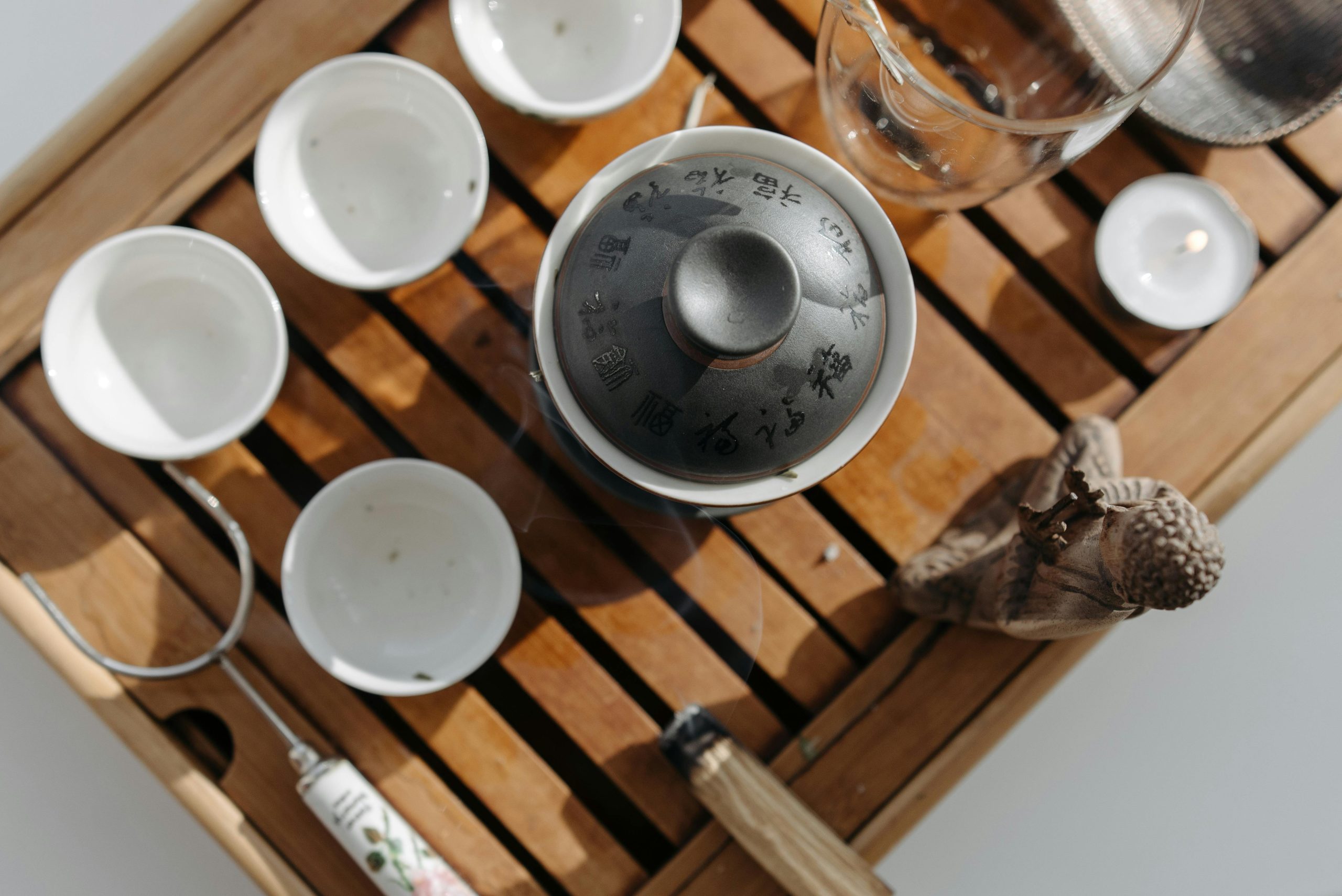
You created Jesse’s Tea House, an online teahouse that shares Chinese tea culture with foreigners. What do you think is the importance of blending two cultures?
I think that today many people look at other cultures or countries with suspicion, worrying that others are going to take something from them or that they will somehow lose out as others grow. But my experience has shown me that so many amazing things in my life have happened because I went into another culture, learned another language, learned another art form, and apprenticed under a comedian in China. A lot of good has come from not seeing this as a zero-sum game. Even things that later became profitable in my life, like running a tea company, started simply because I thought tea was cool and wanted a place to hang out and practice Chinese. I’ve found that if you approach another culture needing it to be practical, people can feel that energy and pull away. But if you come in curious and genuinely interested, you discover so much. You can learn from other cultures about how to live, whether it’s good tea or how to do a good comedy show, and it really enriches your life. Studying another culture takes energy, but what you get back in your own life is the enjoyment of being on this planet and that is more than worth it.
How do you think your experience in the immersion of cultures is going to help USC students and in which specific field?
I believe that today’s students are growing up in an era where technology can solve communication problems like direct translation, but trust is still lacking. I think it is important to truly study another culture, including its language and art forms such as comedy. As for me, I can function both in American society and in another culture, such as China. I recognize that living between cultures is challenging because there is no textbook that teaches you how to do it, and you have to make your own way. However, I believe the future is rich for people who are willing to take on that challenge. I also think that USC, with its diverse student body and cultural events and resources, is a great place to prepare to go out into the world and have a foot in both cultures.
How do you think having these skills such as dealing with instability and uncertainty is going to help current USC students to ease their anxieties about their career prospects or help people understand the world more?
I remember feeling right out of college that I had to get a job and start strong or I would stagnate and it would be over. In hindsight, I’ve realized that I’ve never really had a traditional job. I’ve taken a nontraditional path as an artist, creator, academic, author, and businessman. I believe that in your 20’s, what matters most is being in a place where you’re learning and growing, and where you have at least one real skill that helps move a real project forward—whether that’s in a salaried job, an internship, or even a hobby like comedy. You don’t want to be somewhere you’re just being squeezed and not learning.
I think the old model of stable nine-to-five jobs with long-term security and benefits is disappearing around the world, and work is becoming more dynamic. There are good and bad sides to that instability, and young people are having to face it earlier. At the same time, the stigma around not getting the best internship or not following a perfect path is also crumbling. With technologies like social media, if you’re good at what you do, people aren’t always asking about your age or training. Even in professional settings, there’s more recognition that people can add value without a perfect resume.
As a boss with 12 employees, I care about more than just a resume. I look at how someone works with others, whether they’re willing to go the extra mile, and whether they can take a broad goal and fill in the details. These are skills you can learn at many stages, and almost no one has them perfected right out of college. I think a lot of the pressure we feel is self-inflicted, and it comes from trying to fit into a world that isn’t really there anymore. Being able to deal with instability is becoming a skill in itself, and if you handle it well, you can end up with a more dynamic and interesting life—even if it’s a bit more unstable.
About the author:
Mingwei Song is a graduate student in digital social media, specializing in U.S.–China relations and exploring the cultural, social, and political dimensions of the bilateral relationship.