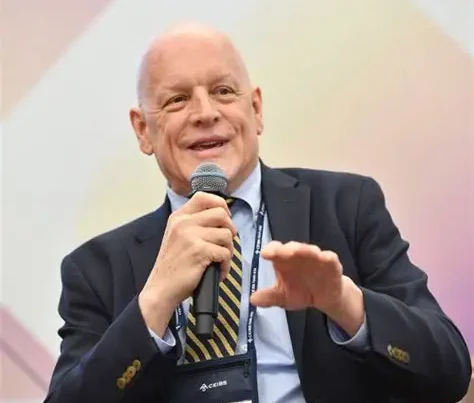
Dr. Stanley Rosen teaches political science, specializing in Chinese politics and society, as well as the study of Hollywood films in China and the prospects for Chinese films in the international market. In addition to his academic activities at USC, Professor Rosen has escorted thirteen delegations to China for the National Committee on U.S.-China Relations, including American university presidents, professional associations, and Fulbright groups. He is an affiliated research scholar at Beijing Normal University’s Research Institute for Chinese Culture and International Communications as well as a member of the international advisory board of Shanghai University’s Center for Media Studies and the Humanities Studies Center of Zhongshan University in Taiwan.
What is the current state of Hollywood-China film collaboration, and do you view it as a form of cultural diplomacy or is that overstating its impact?
That framing overstates it, given what’s going on now. Chinese companies have been active in the past, particularly Wanda and Alibaba, that’s all changed. The Chinese government cracked down on capital going out that was not helping China, including in real estate, sports clubs, entertainment and Hollywood investments. The Chinese government made it much harder to invest and punished companies that would. Hollywood films are not doing well in China by large, so investing in Hollywood studios does not make sense anymore.
At one point Wanda even tried to buy Paramount, but that’s all gone. While there have been a number of investments over the years, right now, there are far better ways to make money other than investing in Hollywood. There are also restrictions placed on Chinese investments. The notion that Chinese companies are investing in Hollywood today is outdated. China is increasing its soft power simply because America is squandering what it has.
Can entertainment meaningfully influence public perception across borders or is its impact limited?
Entertainment can always have an impact, but it is not always clearly visible and you have to be careful with what data you use. For example, a movie like Barbie, which only made $25.5 million dollars in China, still had a big impact on Chinese women in terms of empowerment even though the box office was much smaller. For a subculture among Chinese society and youth, it had a powerful impact.
Even Squid Game, although not officially shown in China because the country does not have Netflix, was allowed on over 60 websites for streaming because authorities knew they couldn’t prevent it anyways. You can’t solely look at box office numbers, it has been going down theatrically, but that does not mean that films do not have an influence.
How do Hollywood filmmakers balance storytelling with the need to appeal to both U.S. and Chinese audiences?
I went to a meeting with the House of Representatives Committee on the Chinese Communist Party, I was there as an academic representative. The Hollywood studio representatives surprised the committee, because it expected to hear what the Pan-American report said: “Made in Hollywood, censored in China”. They heard quite the opposite.
When you have Tom Cruise’s films like Top Gun: Maverick or Spider-Man, these films can make over a billion dollars without any Chinese release. China is much more limited compared to how it used to be and people do not take that into account like they used to.
Film is no longer seen the way it was roughly six years ago before Covid. Additionally Chinese films don’t do well abroad, they are made for domestic audiences. Compared to the popularity of Korean films and television series like Kpop Demon Hunters, Squid Game or Parasite, the Chinese film industry can never replicate that success because of their censorship system. They don’t have the freedom to make those types of films even though they have the talent to do it. The talented individuals are not allowed to do what they could do.
Do you think concerns about censorship of American films are overstated, or are they shaping scripts more than we realize?
It was good for Hollywood studios to get financing from China because that meant a film would be much more likely to get a release and promotions in China. Hollywood has a difficult time being able to market their films in China. It helps to get a release in China and a better marketing strategy with Chinese investment.
Even that is no longer important in the way that it used to be. Due to scandals and backlash, like when Mulan was released (the film drew criticism for shooting in Xinjiang, where the government is accused of human rights abuses), there is too much backlash now and investment is no longer an issue. The bifurcation in terms of entertainment markets between China and the United States is much stronger than it used to be.
From a business standpoint, how important is the Chinese box office for Hollywood today?
It matters only in rare cases like Zootopia 2, which made over 650 million dollars in China as well as the Disney theme park in Shanghai with the Zootopia section. Hollywood is very much in decline, imported films are generally in decline in China. It is that bifurcated market that exists. Chinese films make up over 80% of the box office domestically.
You have things like Squid Game that do extremely well in China, but it is not through any type of official approval. They just realized they could not prevent it from being watched by people anyways, so they decided to have control over which websites are streaming it at least. They had comments censored in Squid Game that had anything to do with the current situation in China.
Where do you see the Hollywood-China collaboration heading in the next 5-10 years?
It’s difficult to say. In the United States, I have no idea what this country will look like in the next 5-10 years. It’s so hard to make predictions. If tensions continue to rise, collaboration will not be strong. There will always be tension, but the outcome depends on how serious it gets.
This interview has been edited for clarity and length.
About the author:
Benjamin Bowman is a sophomore double-majoring in Cinema and Media Studies and Business Administration with a concentration in Entrepreneurship & Innovation. He focuses on exploring the U.S.-China relationship through the entertainment business and through a lens of cultural diplomacy.